

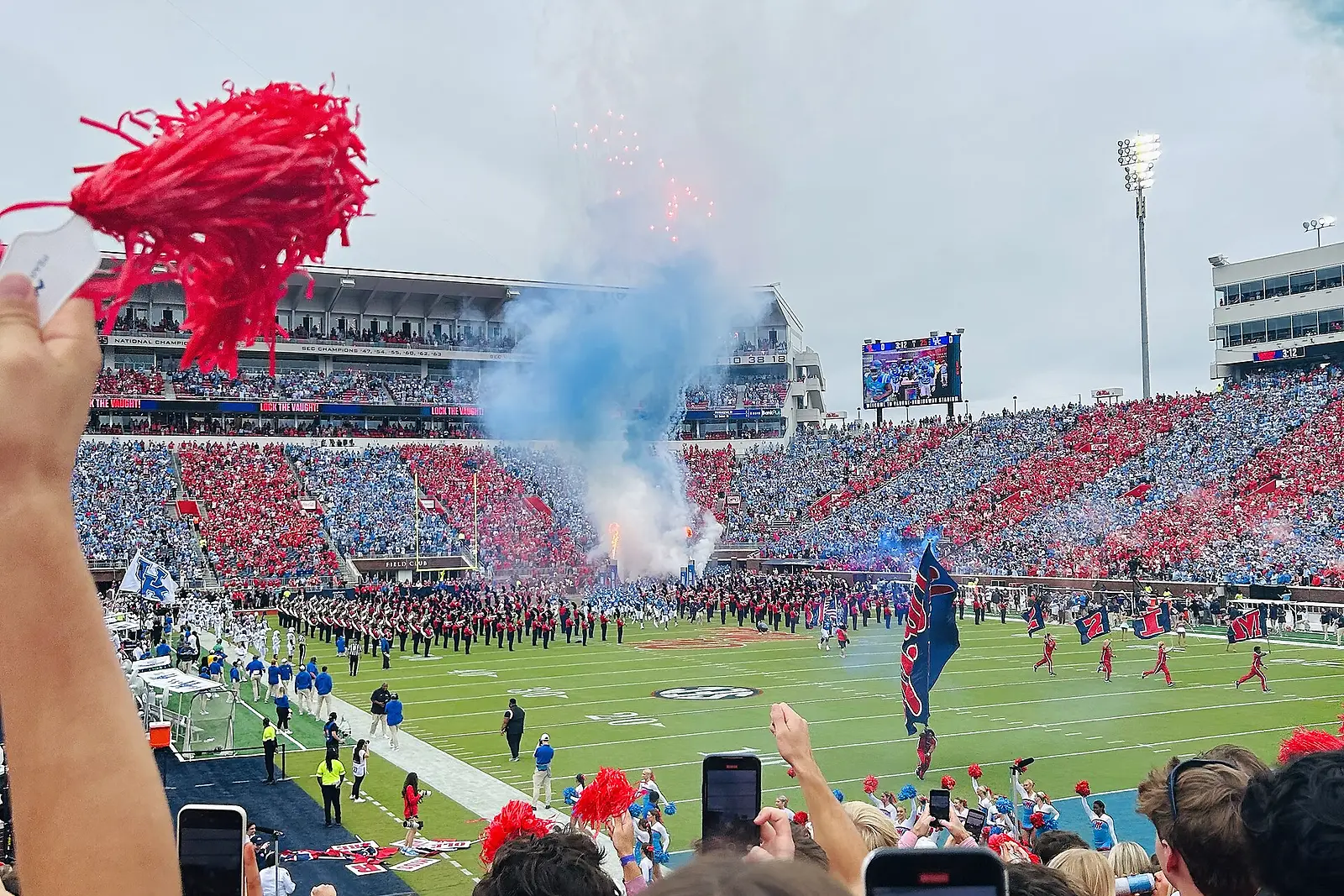
Lane Kiffin came back to Oxford with LSU, a lawsuit trailing the matchup and enough history to swallow the football game whole. Then Trinidad Chambliss made the most interesting part of Ole Miss–LSU the quarterback Kiffin left behind.
Ole Miss won 32–24 because Chambliss kept answering after the emotional script had run out. He completed 33 of 48 passes for 363 yards and two touchdowns. LSU quarterback Sam Leavitt finished with 158 passing yards.
That 205-yard gap matters more than the coaching drama. Kiffin knows the Ole Miss roster, the building and the offense as well as anyone. Chambliss still controlled the game on the field.
The comeback should have changed the night
Ole Miss led 24–7 at halftime. LSU erased all of it, tying the game at 24 with 8:09 left. That is where the obvious story was waiting: Kiffin absorbs the boos, survives the first-half avalanche and steals the game from the program he built.
Chambliss refused to hand him the ending.
He drove Ole Miss 75 yards for the winning touchdown, then completed the two-point conversion. Jaylon Braxton’s interception in the end zone finished it. The official Ole Miss recap credits the Rebels with a 426–330 advantage in total offense, 25 first downs and nine conversions on 15 third downs. That is not a team winning on one emotional burst. It is a quarterback repeatedly keeping the offense on the field.
Chambliss also found answers after LSU adjusted. The Tigers held Ole Miss to 63 rushing yards and turned a 17-point deficit into a tie. When the run game disappeared and every throw became obvious, Chambliss still finished the decisive drive.
That final possession was not scheme beating surprise. LSU knew the ball had to stay in Chambliss’s hands. It simply could not take it away.
That is what makes this bigger than a revenge win. Ole Miss did not merely preserve Kiffin’s system. It showed the offense can belong to the player running it now.
The warning did not disappear
There is a real counterargument. Ole Miss gave away a 24–7 lead, could not run the ball and needed a late interception after LSU reached the 13. A cleaner fourth quarter would not have required Chambliss to rescue the night he had already built.
Fair. But the quarterback question was the highest-leverage uncertainty after Kiffin left. Against the coach who knew where to apply pressure, Chambliss handled 48 attempts, produced 363 yards and won the final possession.
The national Top 25 roundup will remember the ranking and the rivalry. Ole Miss should remember something more useful: when the game stopped being emotional and became a series of third downs, Chambliss was the best quarterback on the field.
My verdict: Ole Miss did not beat Kiffin by proving it can imitate his offense. It beat him by proving Chambliss can own it.
The ability to create first downs and points without depending on a single explosive play.
COACHINGPENDINGV1.0-provisionalDecision quality and situational execution separated from baseline roster strength.
KILL SHOTPENDINGV1.0-provisionalHow often a team turns an advantage or sudden-change opportunity into a decisive extension of the lead.
WHAT’S YOUR TAKE?
Keep it about the game.
YOUR TAKE BELONGS IN THE CONVERSATION.
Create a free StatTake account to comment beneath full articles. Sign in with a private code sent to your email—no extra password.
- Comment beneath every full article
- Choose one public username
- Keep your email private
Loading comments…