

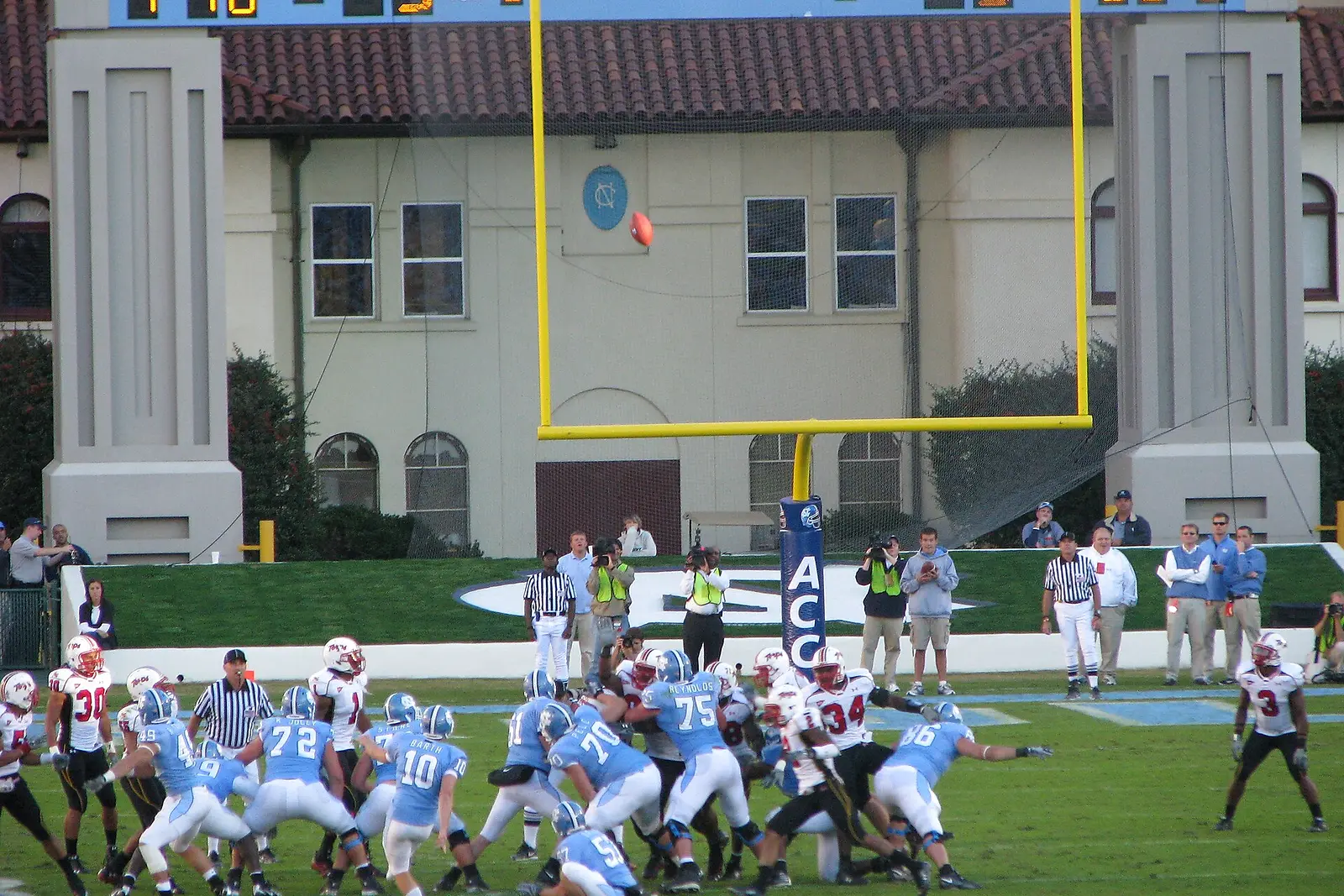
North Carolina did not erase last year's 48-14 loss to TCU with offensive fireworks. It erased it by making 10 points sufficient.
The Tar Heels won 15-10 in Dublin on Saturday, a 34-point year-over-year swing against the same opponent. TCU scored on its first two drives and did not score again. North Carolina forced three turnovers on downs, recovered a fumble and ran out the final 4:05.
For Bill Belichick's second season, the most encouraging part was not that UNC looked transformed. It was that the team finally won in the shape its roster had already suggested.
The defense stopped carrying the offense's consequences
North Carolina's 2025 record obscured a respectable defense. The Tar Heels ranked 38th nationally in total defense and 35th against the run, while an offense that finished 129th in yards repeatedly returned the defense to the field without points or rest.
Saturday looked different after a difficult first quarter. TCU rushed for 111 yards in the first half but managed only 26 in the second, according to the Associated Press game report. The Horned Frogs failed twice on fourth-and-short in UNC territory and finished below 300 total yards.
Xavier Lewis produced 4.5 tackles for loss and two sacks. Defensive end Melkart Abou Jaoude, who recorded 10.5 sacks in 2025, created the decisive strip-sack that became a safety. Those were not empty pressure numbers; they ended drives and changed field position in a game where every point mattered.
TCU had scored at least 28 points in 30 consecutive nonconference regular-season games. North Carolina held it to 10.
Billy Edwards raised the floor, not the ceiling
Wisconsin transfer Billy Edwards Jr. completed 16 of 28 passes for 232 yards without a touchdown. That line will not move UNC into the ACC's offensive top tier. It was still valuable because Edwards avoided the collapse sequence that defined too many 2025 games.
He found tight end Jelani Thurman four times for 94 yards and Jordan Shipp five times for 71. The Tar Heels created enough intermediate offense to keep TCU from ignoring the pass, then protected the ball while the defense controlled the game state.
The closing possession was the clearest evidence. UNC took over with 4:05 left and never gave the ball back. Running out a one-score game is a test of blocking, play selection and quarterback command. It also allows a defense to finish the day on the sideline.
The limitation is obvious. North Carolina scored only one offensive touchdown, rushed for 105 yards and finished with 322 total. The rain narrowed both playbooks, but the Tar Heels still need a dependable red-zone answer and more early-down efficiency. A defense-first identity can make the team functional; it cannot make 15 points a weekly winning target.
TCU helped reveal the difference
Jaden Craig's Power Four debut was controlled early and constricted late. The Harvard transfer completed 20 of 32 passes for 175 yards. Jeremy Payne ran for 142, but North Carolina's second-half front eliminated the easy rushing rhythm.
TCU's fourth-down failures matter when evaluating UNC's defense. Short-yardage stops are high-leverage events, but they can swing on a single block and may not repeat at the same rate. The more portable signal is that TCU went scoreless on eight consecutive possessions after its opening script. North Carolina adjusted, tackled and kept the Horned Frogs from finding a counter.
On StatTake's 2025 EPA board, UNC ranked 119th in overall EPA margin and 106th after opponent adjustment. TCU ranked 54th overall and 35th adjusted. One wet neutral-site game does not reverse those full-season profiles. It does establish new evidence: North Carolina can now win a close game without asking its offense to manufacture every answer.
The new standard is complementary football
The temptation is to call 15-10 proof that the Belichick rebuild has arrived. It is better evidence that the rebuild has found a usable foundation.
UNC's defense was good enough in 2025 to keep the team competitive. Saturday, the offense stopped sabotaging that strength. Edwards delivered field position and possession, the line closed the game, and the defense converted pressure into points and stops.
That formula will be tested when an opponent forces UNC above 20. But after a 34-point loss became a five-point win, the Tar Heels no longer have to sell improvement as an idea. They can point to a game in which their defense dictated every important possession after the first quarter.
Down-to-down performance with less credit for isolated, high-variance plays.
CLUTCHPENDINGV1.0-provisionalHigh-leverage performance when win probability and game state make each play matter most.
SUSTAINABILITYPENDINGV1.0-provisionalThe ability to create first downs and points without depending on a single explosive play.
WHAT’S YOUR TAKE?
Keep it about the game.
YOUR TAKE BELONGS IN THE CONVERSATION.
Create a free StatTake account to comment beneath full articles. Sign in with a private code sent to your email—no extra password.
- Comment beneath every full article
- Choose one public username
- Keep your email private
Loading comments…