

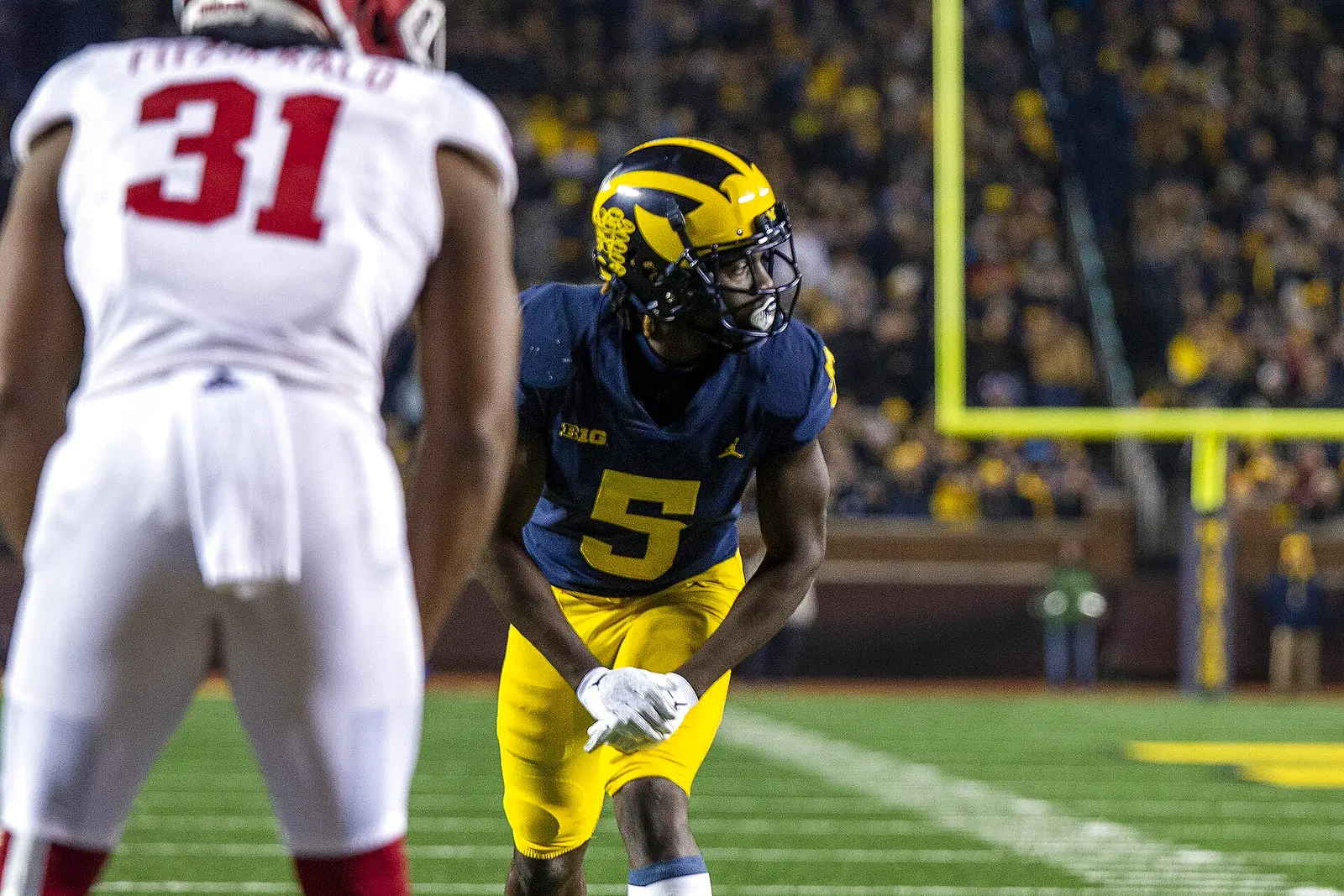
Oklahoma won 51–0. Michigan needed a Hail Mary to beat Western Michigan 13–12. The natural reaction is that one team arrived ready and the other is already in trouble.
I’m not buying that as the most useful reading of Week 1. Oklahoma showed a higher ceiling. Michigan showed us its floor—and that may tell us more.
The Wolverines committed three turnovers, gained 276 yards and ran only 48 plays. Bryce Underwood completed 12 of 22 passes for 170 yards. It was a miserable offensive afternoon.
Yet Michigan’s defense held Western Michigan to 221 yards and 3.3 yards per play. The Broncos ran 67 plays, owned a plus-three turnover margin and still did not score an offensive touchdown. Dominic Nichols produced 2.5 tackles for loss, and Michigan survived the exact game script that usually buries a team, according to the Wolverines’ official statistics.
That does not excuse the offense. It establishes something more valuable than a comfortable opener: Michigan can play badly and remain structurally sound enough to survive.
Oklahoma’s perfection came with fewer questions
The Sooners were excellent against UTEP. John Mateer threw three touchdowns, Oklahoma averaged 6.9 yards per play and scored on its first eight possessions. The defense allowed 198 yards and stopped 11 of 13 third downs. Nothing in Oklahoma’s official game primer suggests the performance was hollow.
But UTEP never forced Oklahoma to reveal a contingency plan. What happens after a turnover? Can the offense function when the first read disappears? Does the defense hold up after being sent right back onto the field? Michigan already answered versions of those questions.
The strongest counterargument is obvious: ugly resilience only matters if the offense improves. Oklahoma’s 2025 defense led the nation in sacks per game and tackles for loss, and it held Michigan to 3-of-15 on third down last season. Underwood cannot treat ball security as optional.
Still, a 51-point margin can hide weak spots as easily as it can prove strength. Michigan’s one-point escape hid nothing. We saw the turnovers, the stalled drives and the pressure placed on the defense. We also saw a unit refuse to crack.
Oklahoma looked better. Michigan gave us better information. Those are not the same thing—and one week into a season, information is more useful than style points.
How frequently an offense recovers after sacks, penalties and other drive-threatening setbacks.
SUSTAINABILITYPENDINGV1.0-provisionalThe ability to create first downs and points without depending on a single explosive play.
NO-LUCKPENDINGV1.0-provisionalA turnover-neutral view of team quality built from the components most likely to persist.
WHAT’S YOUR TAKE?
Keep it about the game.
YOUR TAKE BELONGS IN THE CONVERSATION.
Create a free StatTake account to comment beneath full articles. Sign in with a private code sent to your email—no extra password.
- Comment beneath every full article
- Choose one public username
- Keep your email private
Loading comments…