


The Big 12 has spent years marketing unpredictability. In 2025, the top of the conference was not especially mysterious.
Texas Tech finished third nationally in StatTake’s EPA margin and fifth after opponent adjustment. Utah finished eighth and sixth. No other Big 12 team ranked inside the national top 20 in either measure.
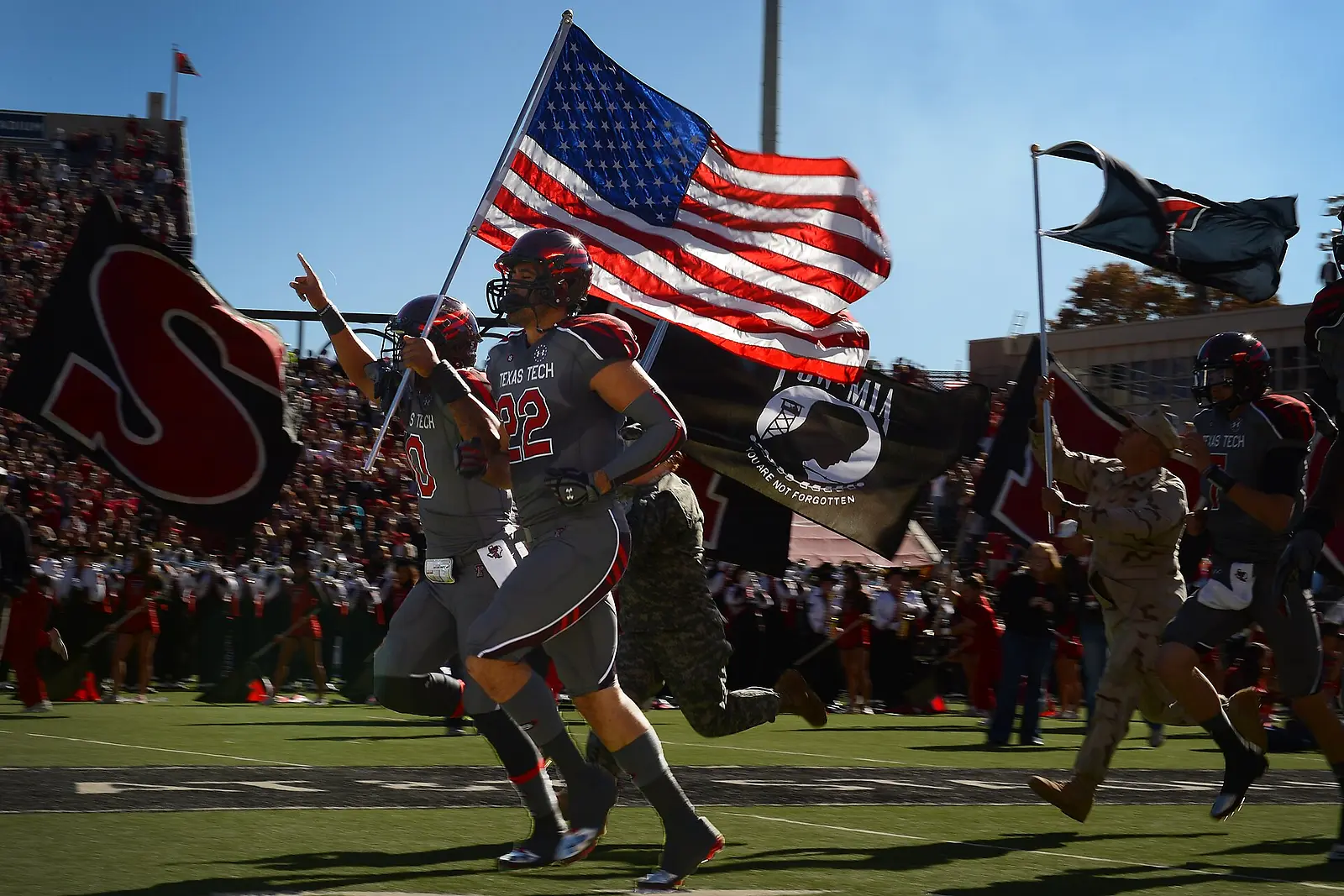
Texas Tech then beat BYU twice—29-7 in the regular season and 34-7 in the conference championship—before Oregon exposed the distance between winning the Big 12 and winning nationally with a 23-0 playoff quarterfinal.
That final result should shape the 2026 preview without erasing what came before it. Texas Tech owned a real conference advantage. The question is whether the Red Raiders can preserve it while building an offense capable of traveling into a playoff game.
The Big 12’s August 17 preseason AP release placed Texas Tech 12th, BYU 14th, Utah 21st and Houston 23rd. Arizona, TCU and Oklahoma State received votes. That ballot presents a four-team front. The data presents two elite 2025 profiles, one consistent challenger and one regression warning.
Texas Tech’s defense created the gap
The StatTake 2025 EPA board ranks Texas Tech second nationally in defensive EPA allowed and first in points allowed per drive at 0.85. The Red Raiders were 25th in offensive EPA per touch and 19th in points per drive.
That composition matters because the playoff loss attacked the weaker half. A defense can keep a team in almost any conference game. Against Oregon, Texas Tech needed answers after the opponent took away its preferred script. The offense did not have them.
Quarterback Will Hammond returns healthy after an ACL injury. Brendan Sorsby, the high-profile Cincinnati transfer, was ruled ineligible, removing the offseason’s presumed answer. Hammond does not need to become the league’s most prolific quarterback. He must protect possessions, create enough downfield threat to stop loaded boxes and turn field position into points.
Joey McGuire again used the portal to protect the roster’s premium positions. Texas Tech’s class ranked sixth nationally in the final June 247Sports-based rankings, with defensive linemen Mateen Ibirogba, Adam Trick, Trey White and Bryce Butler among the important additions. The approach is not cheap depth collection. It is an attempt to keep the country’s No. 2 defensive EPA unit disruptive after normal attrition.
The repeatability question is drive dominance. Holding opponents under one point per drive is an extreme achievement; even excellent defenses usually move toward the mean. Texas Tech can regress in that category and remain the Big 12 favorite if the offense improves. If both phases move backward, the gap closes quickly.
Tier 1 — Texas Tech, Utah and BYU own the title paths
Utah’s 2025 profile was more offensive than its reputation. The Utes ranked sixth nationally in offensive EPA per touch, 15th in offensive success rate and seventh in points per drive. Their defense ranked 21st in EPA allowed and 19th in points allowed per drive. That balance produced the nation’s No. 8 overall EPA margin.
Now Morgan Scalley replaces Kyle Whittingham after more than two decades of program continuity. Scalley is not an outsider; he was Whittingham’s defensive coordinator and designated successor. The more consequential change is on offense, where Utah replaces all five starting offensive linemen while retaining quarterback Devon Dampier.
That creates the conference’s clearest sustainability test. Scheme continuity and quarterback experience protect some of the No. 6 offensive EPA performance. Replacing an entire line threatens the timing and physical control that made it possible. Utah’s defense should keep the floor high, but the offense may need months rather than weeks to reproduce its 2025 rank.
BYU owns the best argument against a two-team model. The Cougars went 12-2, losing only to Texas Tech, and return quarterback Bear Bachmeier and Big 12 rushing leader LJ Martin. Bachmeier threw for 3,033 yards and 15 touchdowns, rushed for 527 and added 11 scores as a true freshman. Martin ran for 1,305 yards and 12 touchdowns.
The 2025 metrics place BYU 24th in EPA margin, 16th adjusted, 44th on offense and 27th in defensive EPA allowed. Those are strong but not dominant figures. The Cougars’ depth and continuity make improvement credible, especially at quarterback. The concern is matchup specificity: in two games against Texas Tech, BYU scored 14 total points, and Bachmeier produced 303 passing yards, one touchdown and three interceptions.
BYU does not need to prove it can beat the league. It needs to prove it can solve the one defense built to erase its preferred answers.
Tier 2 — Houston and Arizona are rising; Cincinnati is the volatility play
Houston’s 10-3 season and No. 23 ranking make the Cougars a popular contender. The roster case is persuasive. Conner Weigman returns after 2,705 passing yards, 25 passing touchdowns, 700 rushing yards and 11 rushing scores. Receiver Amare Thomas caught 67 passes for 966 yards and 12 touchdowns. Willie Fritz adds running back Makhi Hughes and retains enough experience to expect another winning season.
The efficiency profile is much less comfortable. Houston ranked 73rd in EPA margin, 71st after opponent adjustment and 108th in offensive EPA per touch. The defense ranked 36th in EPA allowed and 41st in points allowed per drive, giving the Cougars a credible floor. The offense’s 10-win conversion rate is the concern.
Houston can be better on offense and win fewer games if close-game outcomes normalize. That is not contradiction. It is why preseason rankings should separate roster improvement from record repeatability.
Arizona is the cleaner rise candidate. The Wildcats went 9-4, ranked 34th in EPA margin and 37th adjusted and return quarterback Noah Fifita. Arizona’s defense ranked 34th in EPA allowed; the offense was 54th. Those numbers lack an elite phase but offer fewer red flags than Houston’s. A modest offensive jump can place Arizona in the title-game race.
Cincinnati is the league’s purest volatility profile. The Bearcats ranked 13th nationally in offensive EPA per touch and 17th in points per drive, but 105th in defensive EPA allowed and 90th in points allowed per drive. They replace quarterback Brendan Sorsby with Georgia Southern transfer JC French IV, who threw for 2,929 yards and 20 touchdowns in 2025.
If the offense preserves its structure and the defense becomes merely poor instead of bottom-30, Cincinnati can rise. If quarterback transition lowers the offense while the defense stays the same, the Bearcats can fall below bowl eligibility.
Tier 3 — Iowa State, Kansas State, TCU and the crowded middle
Iowa State ranked 44th in EPA margin and 42nd adjusted, but Matt Campbell and a large group of players left for Penn State. Jimmy Rogers takes over after one season at Washington State. The Cyclones’ numbers describe the previous structure; the roster now tests whether the program’s development system belonged to the institution or the coach.
Kansas State begins a different succession. Collin Klein returns to his alma mater after Chris Klieman’s retirement. The Wildcats ranked 50th in EPA margin, 30th adjusted, 51st on offense and 52nd in defensive EPA allowed. That is the profile of a stable six-to-eight-win team with no elite phase. Klein’s offensive familiarity can preserve competence; title contention requires a skill player or pass rush to create separation.
TCU ranked 54th in EPA margin and 35th after opponent adjustment during a 9-4 season. Its offense ranked 47th and defense 63rd. The Horned Frogs are good enough to punish transition teams and thin enough to be exposed by the top tier. Their Week Zero game against North Carolina in Dublin gives the conference an early external data point, but the league race will turn on whether TCU can create a top-30 phase rather than remain balanced around 50th.
Arizona State, UCF, Baylor and Kansas carry more obvious flaws. Arizona State ranked 56th overall but loses much of the offense. UCF was 68th, with neither side inside the top 50. Baylor ranked 70th and adds DJ Lagway at quarterback after he produced 28 touchdowns and 23 interceptions across two seasons at Florida. Kansas ranked 31st in offensive EPA but 121st on defense.
Lagway gives Baylor upside because arm talent can change the geometry of an offense. His turnover history also mirrors the program’s instability. Kansas offers the more direct fix: keep a top-35 offense and make the defense playable. Neither is a safe contender.
Tier 4 — Oklahoma State can rise dramatically without contending
Oklahoma State went 1-11, lost its 19th consecutive Big 12 game and finished 134th—last nationally—in EPA margin. The Cowboys ranked 133rd in offensive EPA, 129th in defensive EPA allowed and 134th in points per drive.
Eric Morris replaces Mike Gundy and imports a large North Texas contingent, including quarterback Drew Mestemaker, the 2025 national passing leader with 4,379 yards; running back Caleb Hawkins, who rushed for 1,434 yards and an FBS-best 25 touchdowns; and receiver Wyatt Young, who caught 70 passes for 1,264 yards and 10 scores. Oklahoma State’s portal class ranked 15th nationally in the final June list after ranking even higher earlier in the cycle.
That is enough to forecast improvement. It is not enough to skip the middle. The Cowboys can climb 60 places in EPA margin and still rank outside the top 70. Morris must establish offensive competence while rebuilding a defense that finished near the bottom of every meaningful measure. Bowl eligibility would be a strong first season. A title prediction would confuse roster activity with completed repair.
West Virginia and Colorado also begin in the stuck tier. West Virginia ranked 106th in EPA margin and 122nd in offensive success rate. Colorado ranked 110th overall, 131st in offensive success rate and 107th in defensive EPA allowed. Both need an identity before they need a contender argument.
The conference’s national problem
Texas Tech gave the Big 12 a first-round bye and then lost 23-0. The conference is 1-8 in College Football Playoff games and has never placed multiple teams in the field. Those facts affect perception because preseason and committee debates do not happen in a vacuum.
The Big 12 therefore needs two different kinds of evidence. Texas Tech, BYU, Utah and Houston need quality nonconference wins that survive into November. The champion needs to perform in the playoff strongly enough that future 11-1 and 10-2 teams are evaluated as national contenders rather than winners of an isolated league.
Depth can help. Four ranked teams and three more receiving votes create more internal résumé opportunities. Depth can also become circular if the teams lack outside wins. Beating a ranked conference opponent matters most when that opponent earned its ranking beyond the conference.
That is why TCU–North Carolina, BYU’s nonconference schedule and every Power Four crossover carry more weight than one Saturday. The Big 12 does not need to imitate the SEC or Big Ten. It needs portable proof.
The StatTake conclusion
Texas Tech remains the pick because the Red Raiders’ advantage was built on the nation’s No. 2 defensive EPA and No. 1 points-per-drive defense, not only close wins. Utah is the most complete challenger if a new offensive line holds. BYU is the continuity challenger with the exact matchup problem it must solve.
Houston is the regression watch despite real roster improvement. Arizona is the quieter riser. Cincinnati can move sharply in either direction. Oklahoma State will be far better and still should not be mistaken for ready.
The Big 12 will produce chaos in the middle. The top is more ordered than the brand suggests. Texas Tech created a real gap in 2025, and the burden is on the rest of the league to close it—not merely to call the race unpredictable.
Down-to-down performance with less credit for isolated, high-variance plays.
RESUMEPENDINGV1.0-provisionalWhat a team has accomplished, with explicit credit for opponent, location and quality wins.
POWERPENDINGV1.0-provisionalOpponent-adjusted team quality designed to describe how strong a team is right now.
WHAT’S YOUR TAKE?
Keep it about the game.
YOUR TAKE BELONGS IN THE CONVERSATION.
Create a free StatTake account to comment beneath full articles. Sign in with a private code sent to your email—no extra password.
- Comment beneath every full article
- Choose one public username
- Keep your email private
Loading comments…